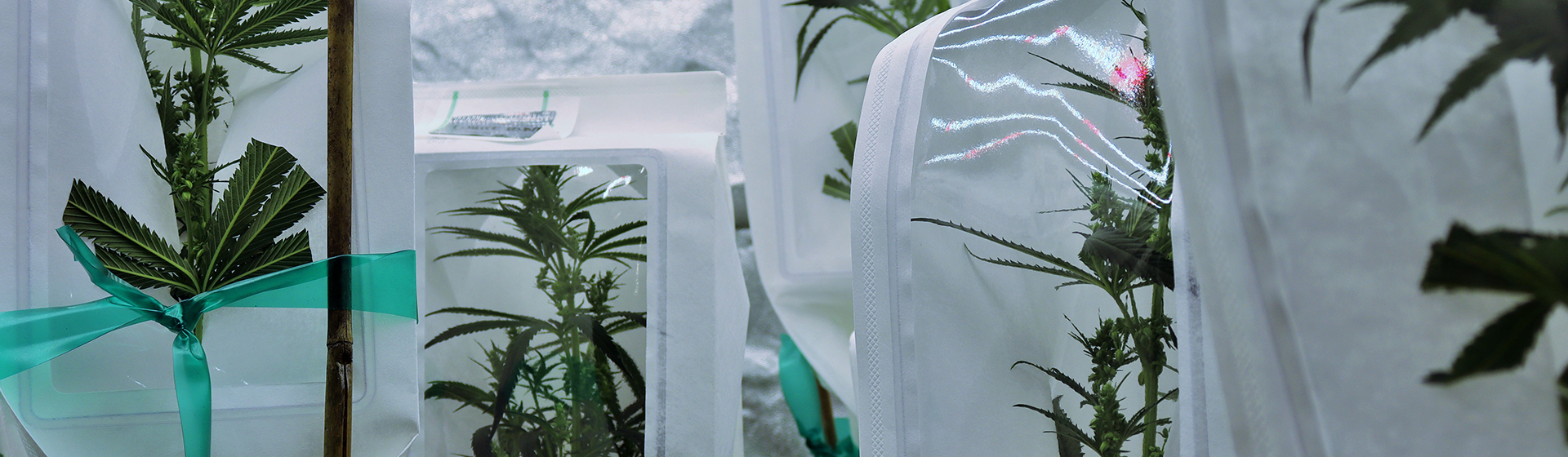
As applications for cannabis sativa (cannabis) are increasingly recognised, cannabis breeding is taking place on a larger scale than before. Limited formal research and difficult pollination conditions means that cannabis breeding is challenging. Pollination control bags and tents can help overcome challenges such as contamination, humidity build up, and more.
What makes cannabis breeding difficult?
Cannabis breeding is challenging for a number of reasons:
- Lack of formal research: Long-term prohibition and challenging regulatory hurdles means that there is little scientific research into cannabis, as reported by the National Center for Biotechnology Information, and therefore even less research in how best to breed it.
- Unstable sex states: Cannabis is a dioecious plant that can turn monoecious (hermaphrodite) under stress, meaning it can easily switch sex states while growing and cause unwanted pollination to occur.
- Vulnerable to pests: Cannabis plants are prone to pest infestations and diseases which can impact outputs at harvest.
- Small and wide-reaching pollen: As a wind-pollinated plant, cannabis pollen is extremely small and disperses widely, making it is very easy for cross-contamination to occur. This is especially undesirable when breeding traits into new cannabis plants or producing seeds with controlled THC content.
How can pollination control improve cannabis breeding?
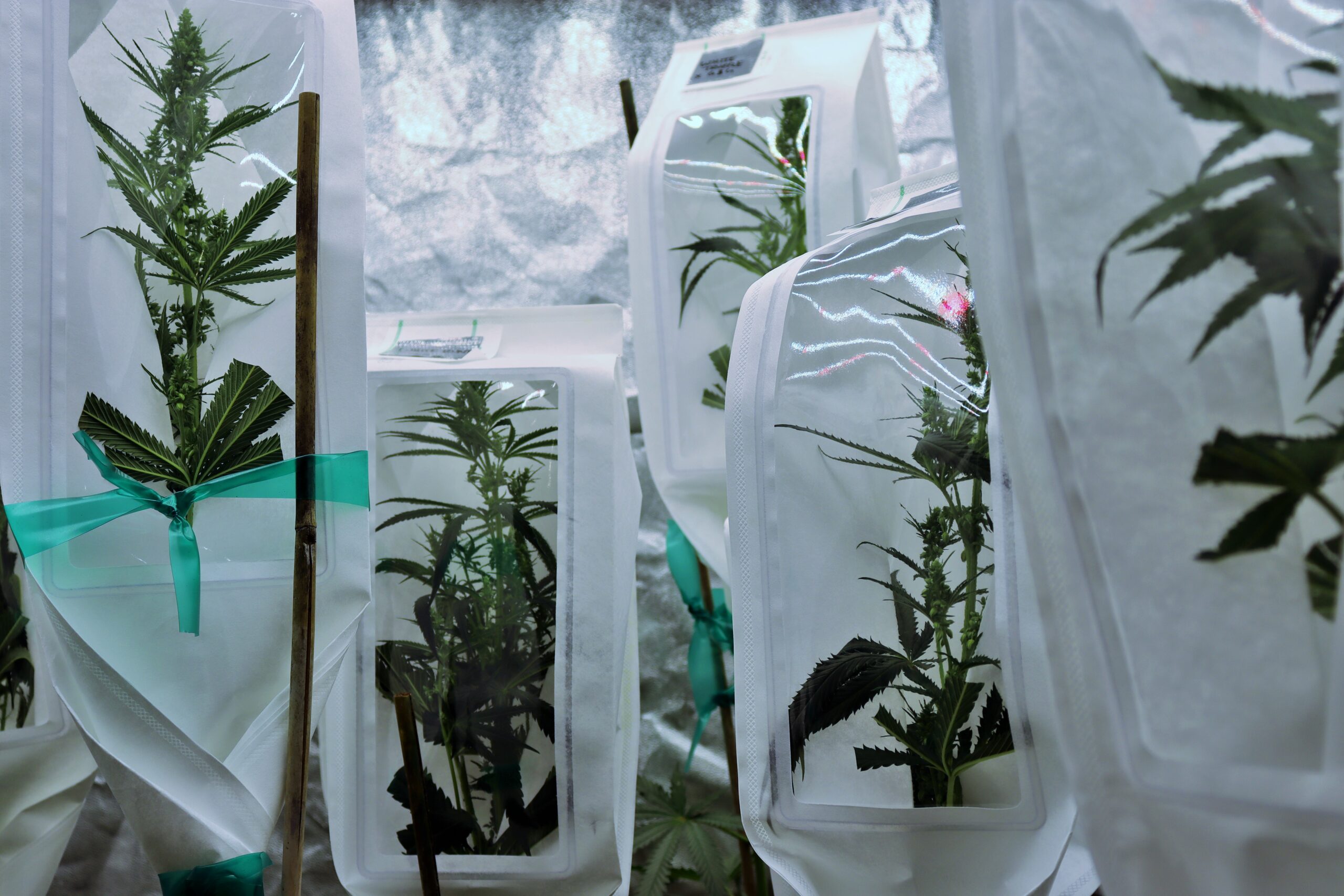
Pollination control bags and tents offer a proven solution to overcoming many of these challenges.
PBS International’s pollination control products are all made using our proprietary duraweb® family of materials. These materials offer significant improvements to breathability compared to traditional paper bags, which reduces the risk of humidity build up and subsequent mould and disease incidence, as well as helping to maximise yields when breeding new cultivars. Improved breathability also prevents hermaphroditism in cannabis plants, reducing the risk of unwanted pollination occurring during breeding cycles.
Pollination control bags and tents also offer protection for contained plants. The duraweb® materials offer pollen protection for pollen particles as small as 15μm, ensuring that genetic purity is maintained as pollination can occur between contained plants, while unwanted pollen is kept out. In regions where THC content is strictly controlled and breeders must accurately declare THC concentrations in seeds, this is especially important and protects breeders from expensive losses and reputation damage.
How to use pollination control bags and tents in cannabis breeding
Using pollination control in cannabis breeding couldn’t be easier. Firstly, you should decide whether bags or tents would be better suited to your project based on your set up.
- If you are growing two separate cannabis plants and only want pollination to occur in one specific area, one of our smaller bags may be a better fit.
- If you want to grow two cannabis plants in the same pot to breed, consider one of our larger bags or even a Citadel mini tent
- For scale-up and line breeding, consider one of our patented Citadel midi or maxi tents, which are large enough to house multiple plants.
How to choose the optimal product to support your cannabis breeding programme
- Browse our range of PBS International range of bags and patented pollination control tents and select the products best suited for your cannabis breeding set up.
- Once your products have been delivered, put them into position as per your breeding set up.
- For bags: Place the bag around the branches of the plant, or around the entire pot, and secure it tightly at the base to minimise contamination risk.
- For tents: Build the frame first, and then install the duraweb® wall and door panels – we have in-depth video and written tutorials that show how to build our tents, which you can contact our team to access
- If your bag or tent has windows, you can monitor the plant through the window while ensuring the contained plants remain isolated.
Supporting genetic integrity in cannabis with PBS International pollination control
We work closely with a number of cutting-edge cannabis breeders in America, Germany, Switzerland, and the UK. Typical use includes support with lineage management (purity) programmes. While bags are used to isolate specific parts of plants, custom tents featuring additional windows are also used to isolate whole plants during the growing and breeding cycle.
PBS International bags and tents allow breeders to develop high quality cannabinoids to meet their customers’ requirements, maintaining genetic integrity and purity while also keeping the breeder within the regulations surrounding cannabis breeding and production. They also help breeders to overcome challenges with pollination control in terms of pollen collection and breeding set up. As one customer comments, “With the PBS International bags, I can collect the pollen safely and selectively pollinate in any combination I wish. Before I would have to find a different area far removed from the flowering female cannabis plants. These pollen bags are a game changer. I can use a much smaller footprint for my breeding activities now!”
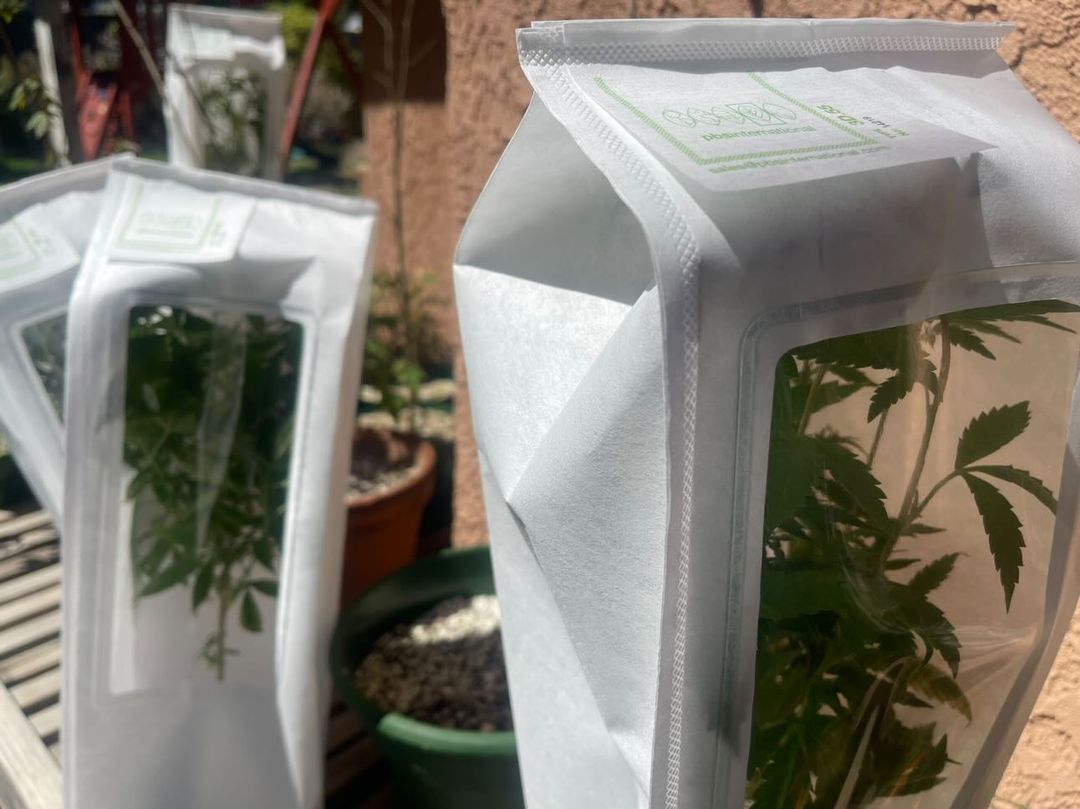
Cory Klimek is another of our customers, based in the US. Cory is a Cannabis Breeder at SeedHeads who uses the PBS International 3D.55 bags to isolate cannabis plants during the breeding process. He comments:
“I have been using the PBS International bags since 2020. They are a good size for cannabis breeding, and we’ve seen major benefits in helping us keep pollen samples separated and preventing cross contamination. The bags are much more breathable than paper bags, helping to stop humidity build up which can destroy the pollen. I would certainly continue to purchase PBS International bags and highly recommend PBS International products to other breeders.”
Cannabis “terroir” – how environmental factors shape cannabis
Many cannabis breeders choose to grow plants indoors, to allow for more control over growing conditions when crossing or breeding specific cultivars. However, for cannabis breeders and growers who are growing plants outside, it is becoming increasingly apparent that natural growing conditions can impact cannabis at a chemical level.
Like wine and coffee, terroir also exists within cannabis. Factors such as soil, climate, and light can impact flavours, aromas, and physical traits in cannabis, meaning the same strain grown in two separate regions might differ in taste and effects.
Switzerland as a region is pioneering cannabis research, as the country is not part of the EU, meaning it has more freedom to set its own regulations around cannabis growing and use. For example, Switzerland has a liberal 1% THC limit (compared with the EU’s Common Agricultural Policy, which caps THC content in cannabis plants at 0.3%). Similarly, Canada is also considered a leader in cannabis growing and production. As per the Cannabis Act, cannabis is legalised in this region and there is no set limit on THC content in plants.
As such, Swiss and Canadian cannabis breeders are at the forefront of research, with some breeders reporting on cannabis terroir. This paper by Poetzsch et al details a new chemical profiling workflow for cannabis to better understand chemical composition and therapeutic profiles of different strains in Switzerland, while this paper by Mudge et al explores how terpene abundance can impact aromatic differences across cannabis chemovars in Canada.
PBS International’s top tips for cannabis breeding
- Opt for bags and tents with windows, to monitor contained plants without risking contamination by opening them.
- Choose a bag or a tent that is bigger than the plant – more space around the plant helps to reduce humidity build up. This is especially important if your set up involves wrapping a bag around the plant pot itself.
Breed cannabis more confidently with science-backed PBS International pollination control products – the gold standard for maximising yields, maintaining genetic purity, and protecting against contamination.
Visit our dedicated page to see the products we recommend for cannabis breeding: https://www.pbsinternational.com/key-sectors/hemp-hops-cannabis/
FAQs
Q: How does pollination control improve cannabis breeding?
A: Quality pollination control can protect against external contamination; mitigate the risk of mould or disease incidence due to improved breathability; and reduces the risk of unwanted pollination occurring as plants are less likely to become stressed and turn hermaphroditic.
Q: How do I know whether a bag or a tent is better for my cannabis breeding project?
A: Our product guide and products page list all the information you need about our different bags and tents so you can make an informed choice based on your breeding set up and project goals. If you’re still not sure, you can submit an enquiry to our team who can suggest the best solution for you.
Glossary
Dioecious: Plants that have distinct male and female reproductive organs on individual plants.
duraweb®: PBS International’s proprietary range of materials used to make pollination control bags and tents. The material is made of randomly laid polyester fibres, making them resistant to tearing and stops pollen from passing through, while still allowing air and light through.
Hermaphroditism: Plants that have both male and female reproductive organs on a single plant. Many flowering plants are hermaphroditic by nature, but in cannabis, dioecious plants can turn hermaphroditic (develop both sets of reproductive organs) when stressed.
Terroir: A French term referring to how the natural environment in which a plant is grown (combining soil, climate, sunlight, and topography) can influence flavour and aroma in a way that is specific to the region.
THC: Tetrohydrocannabionol, the primary psychoactive compound in cannabis. Due to THC’s psychoactive effects, there are strict regulations around its concentration in legal cannabis-based products.